
At four in the morning Tiananmen Square is lamplight, street sweepers and a few parked police vans. Over the next forty minutes it fills. By the time the sky behind the museum on the east side has gone from black to grey, several thousand people are pressed against the barriers at the north end, and the ceremony they came for lasts about three minutes. The rest of a dawn visit is paperwork and queueing, and all of it can be sorted a week in advance.
What you see when the flag goes up
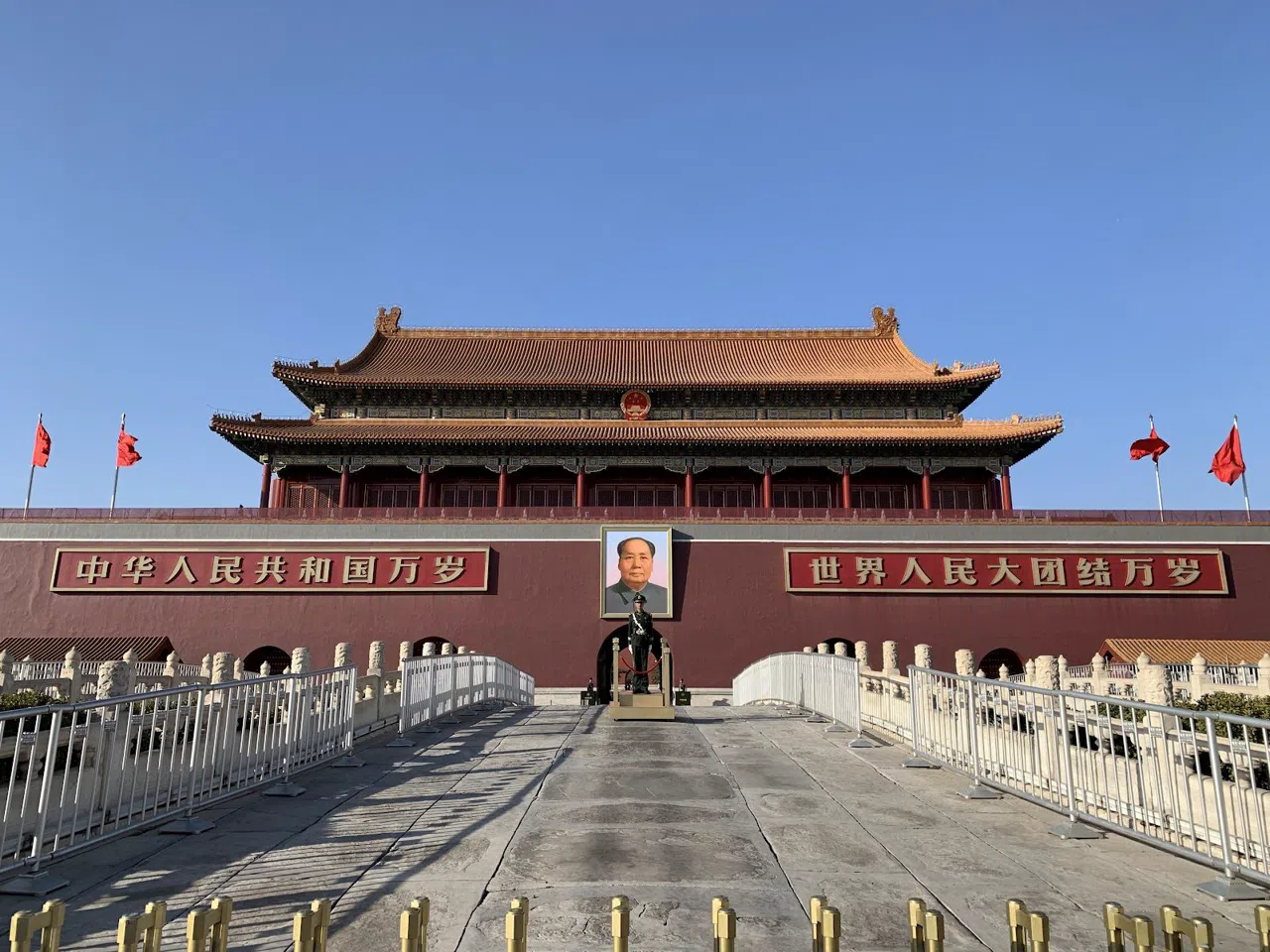
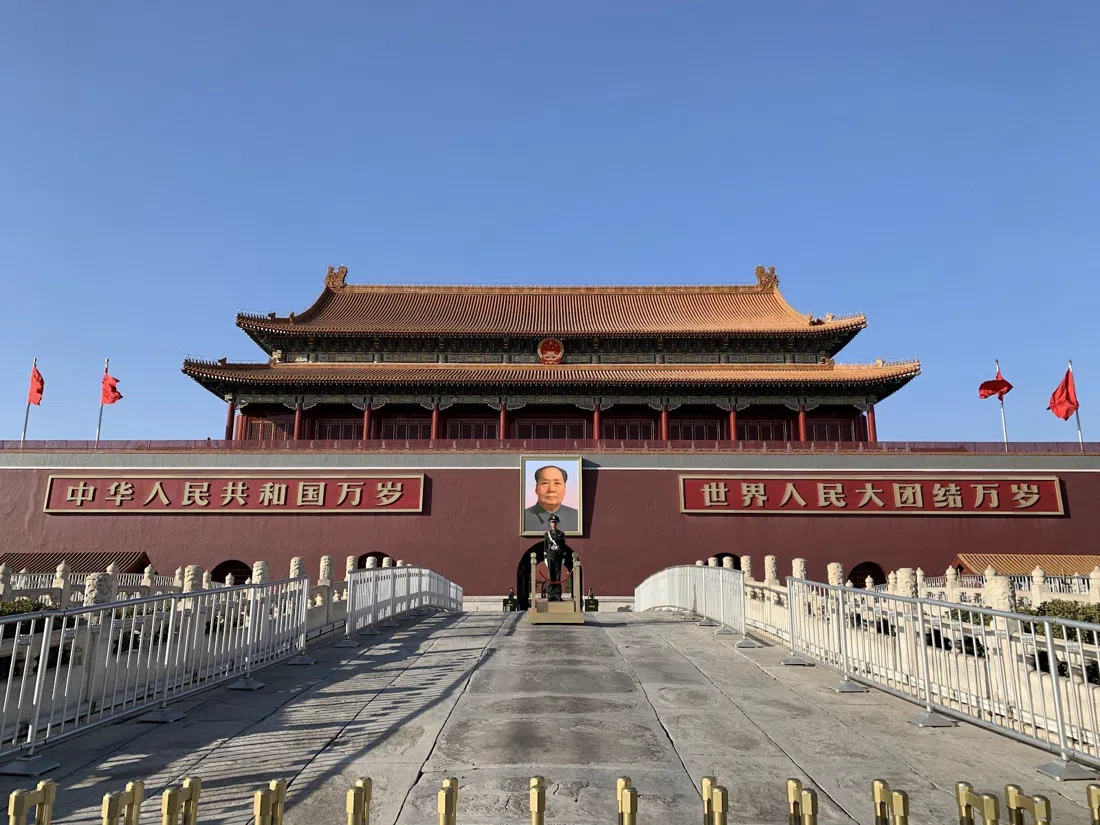
Tiananmen Square (Tiananmen Guangchang), Dongcheng, is a flat granite plain in the centre of the city with a ceremonial building on each side: the gate and its rostrum north, the national museum east, the Great Hall west, the mausoleum south, and a granite obelisk in the middle. At dawn none of that is what you are looking at. The crowd faces a single flagpole at the north end, beyond the barriers. A detachment of the guard marches out from beneath the gate, crosses the avenue, the anthem plays, and the flag runs to the top of the pole.
If you are more than ten or fifteen rows back, what you see is helmets, a red rectangle climbing, and a forest of raised phones. There is no seating, no commentary and no second run. The exact sunrise minute is published in advance for each date and the ceremony is timed to it, so the clock moves all year: just before five in high summer, closer to half past seven in the depth of winter. Check the figure for your date rather than assuming, because the barriers are full long before the guard appears.
The appeal of the dawn version is not the three minutes. It is the half hour afterwards, when the crowd drains north toward the palace queue and east toward the metro, the light comes in low and side-on across the paving, and you can stand in the middle of a space that will be shoulder to shoulder by ten.
Booking a slot, because there is no walk-up
Free-entry real-name booking has been compulsory since December 2021. You reserve one to seven days ahead through the official WeChat mini-programme, with your passport number, and you pick a slot: flag-raising, morning, afternoon or flag-lowering. Every person needs their own reservation, children included. There is no group gate and no group allocation, so a party of twenty is twenty individual bookings, and a tour party still files through the same X-ray checkpoints as everyone else.
Carry the physical passport. A photo of the page will not pass the ID check, and the scanner wants the document rather than your booking screenshot. The booking flow is Chinese-language and assumes a verified WeChat account, which in practice is the biggest obstacle for a first-time visitor, more of one than the queue itself.
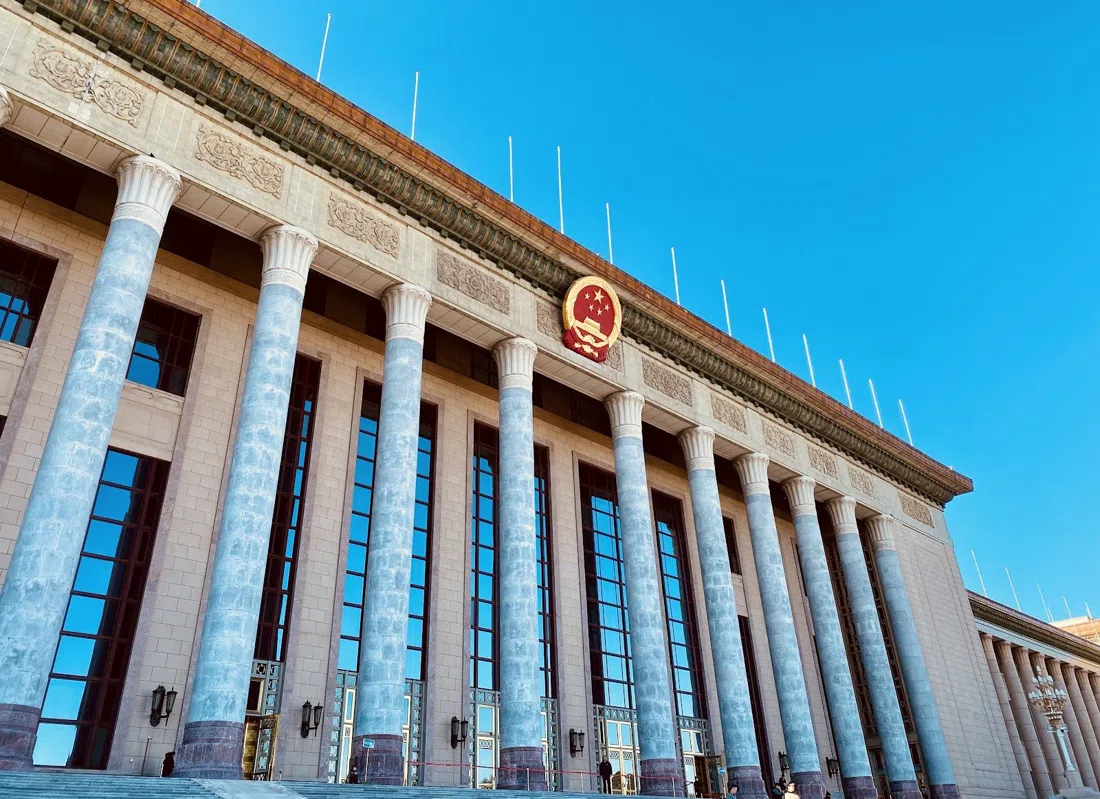
A valid reservation for the Great Hall of the People, on the square's west side in Dongcheng, also covers your entry into the square. That does not help at sunrise, since the hall opens later, but it simplifies a second visit.
Getting through the checkpoints before sunrise
Plan to be at a cordon sixty to ninety minutes before the published sunrise time, and earlier at weekends. Police direct arriving foot traffic to the checkpoints on the east and west sides; bags go through X-ray, and expect your passport to be checked more than once between the street and the paving. Bring as little as possible. Nobody skips this line, not tour groups, not ticket holders for anything else.
The head-on view from the gate tower
Tian'anmen Rostrum (Tiananmen Gate Tower), at the square's north edge in Dongcheng, reopened to the public on 5 September 2025 after works, and it is the one place you get the classic head-on view straight down the square. Entry is CNY 15 for adults and CNY 5 concession. Tickets release daily at 17:00 for seven days ahead, it is closed on Mondays, and there is no same-day or on-site sale of any kind. Booking is individual and real-name only, with no group allocation, and an adult must book alongside any under-14 they bring.
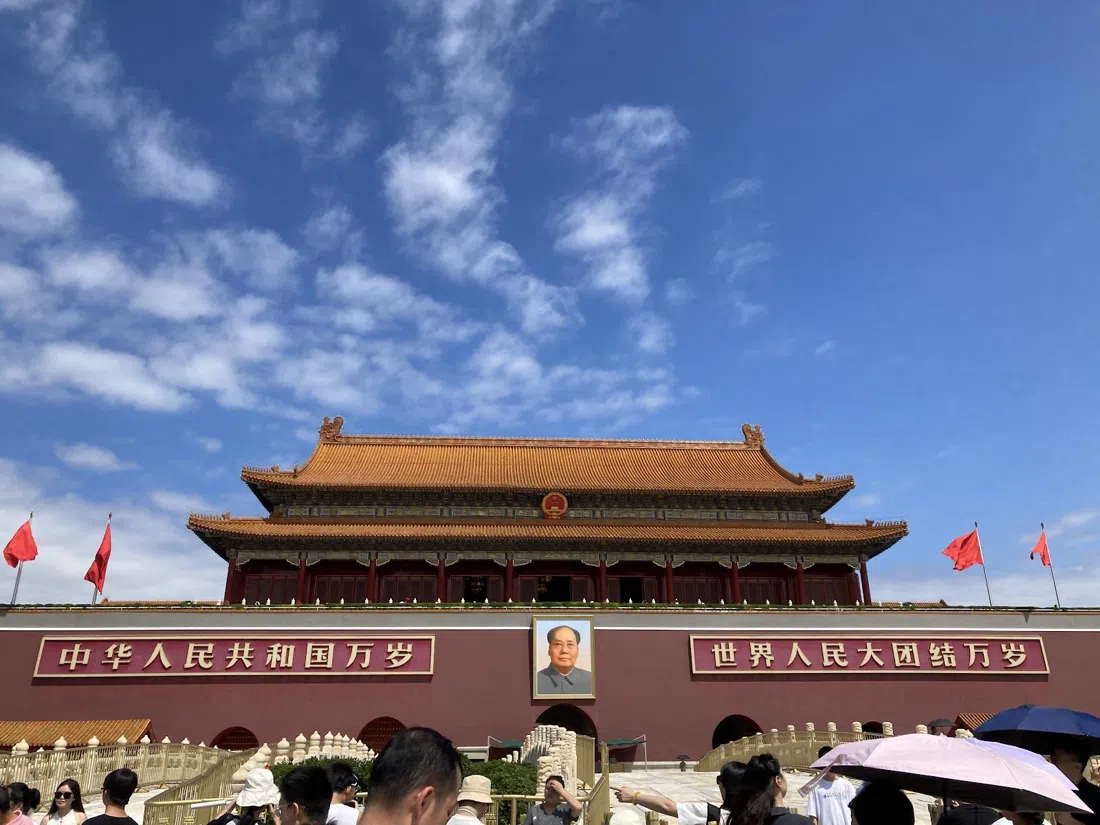
It is not a dawn option, since it opens well after the ceremony, so treat it as the second act of the same morning rather than part of the first.
The three buildings on the square
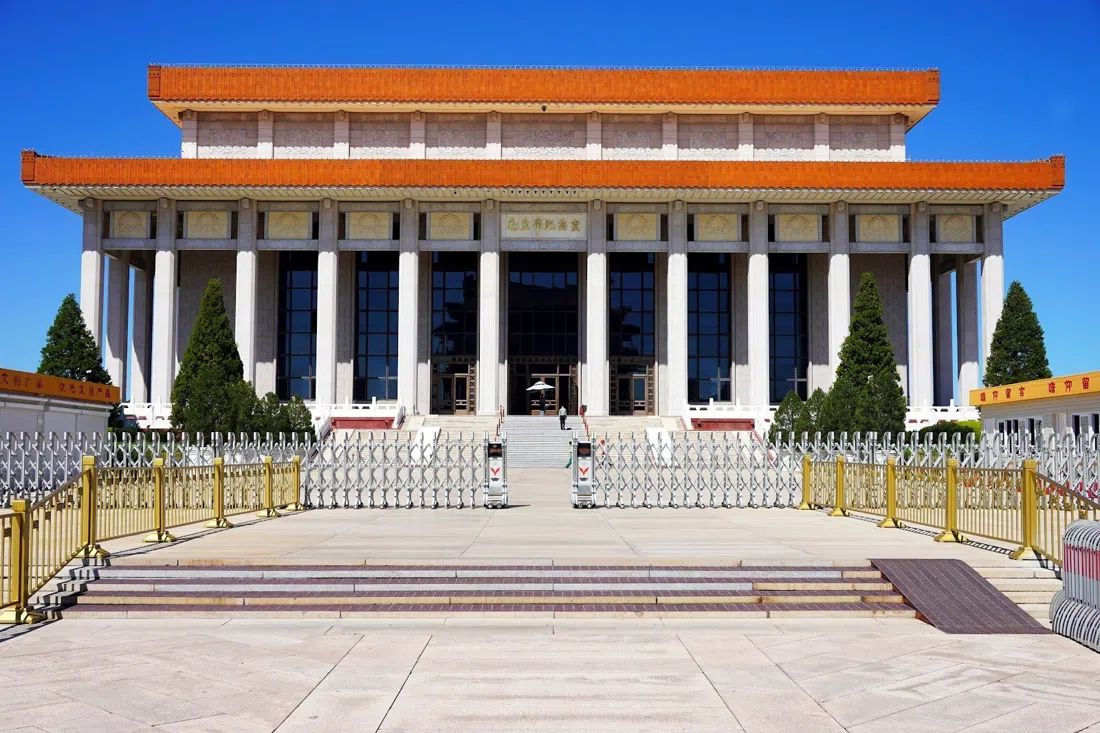
Chairman Mao Memorial Hall, at the square's south end in Dongcheng, closed on 16 March 2026 for a full renovation and reopened on 1 September 2026, Tuesday to Sunday, 08:00 to 12:00. Entry is free but booked one to six days ahead through the official WeChat account or mini-programme, or the People's Daily page, with tickets dropping at 12:30. A booking covers up to five people and each account may hold only one pending booking, so a large party has to split across several accounts; children need their own slot. Bags, cameras and phones go into lockers, there is no photography inside, and only the official channels are legitimate. It pairs neatly with the ceremony: flag at sunrise, then the queue for an eight o'clock opening.
National Museum of China, on the east side of the square in Dongcheng, is free and never walk-in. Tickets release at 17:00 for the date exactly seven days out, it closes on Mondays, and hours are 09:00 to 17:00, extended to 17:30 from June to October. Five people per booking, one booking per account per week, and three no-shows lock an account out for thirty days. The passport used to book has to be presented at security. It is the sensible place to put a rainy morning or the hottest part of a summer day.

The Great Hall of the People costs CNY 30 for adults, half price for students, and is free for under-18s and seniors. It runs roughly 09:00 to 15:00, closes on Mondays, and shuts without much notice whenever the National People's Congress or another state session is sitting, so check before you build a day around it. Entries are sold as individual timed slots through a Chinese-only mini-programme, and groups almost always need a local operator to handle both the booking and the four successive security screenings.
South of the square through Zhengyangmen
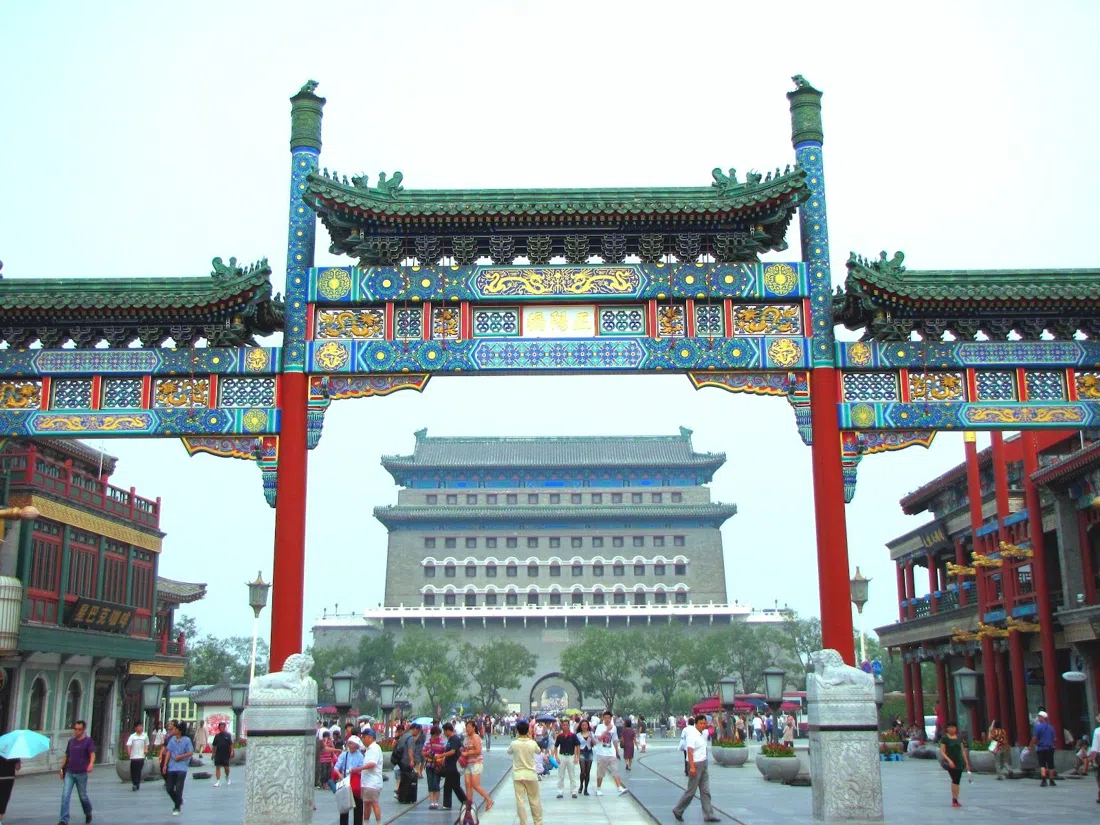
Zhengyangmen Gate Tower (Qianmen), Qianmen in Dongcheng, reopened on 27 July 2026 after a six-year restoration. Entry is CNY 20, Tuesday to Sunday, 09:00 to 17:00, with tickets released daily at 17:00 via the Beijing Central Axis Heritage Protection Centre WeChat account. You still come in through the square's security and then the west entrance on the tower's south side. Free guided tours run at 09:30, 11:30, 13:30 and 15:30. Reservations are individual only; the operator has confirmed that group bookings are not yet available. The Archery Tower next door, open again since December 2024, is part of the same complex.
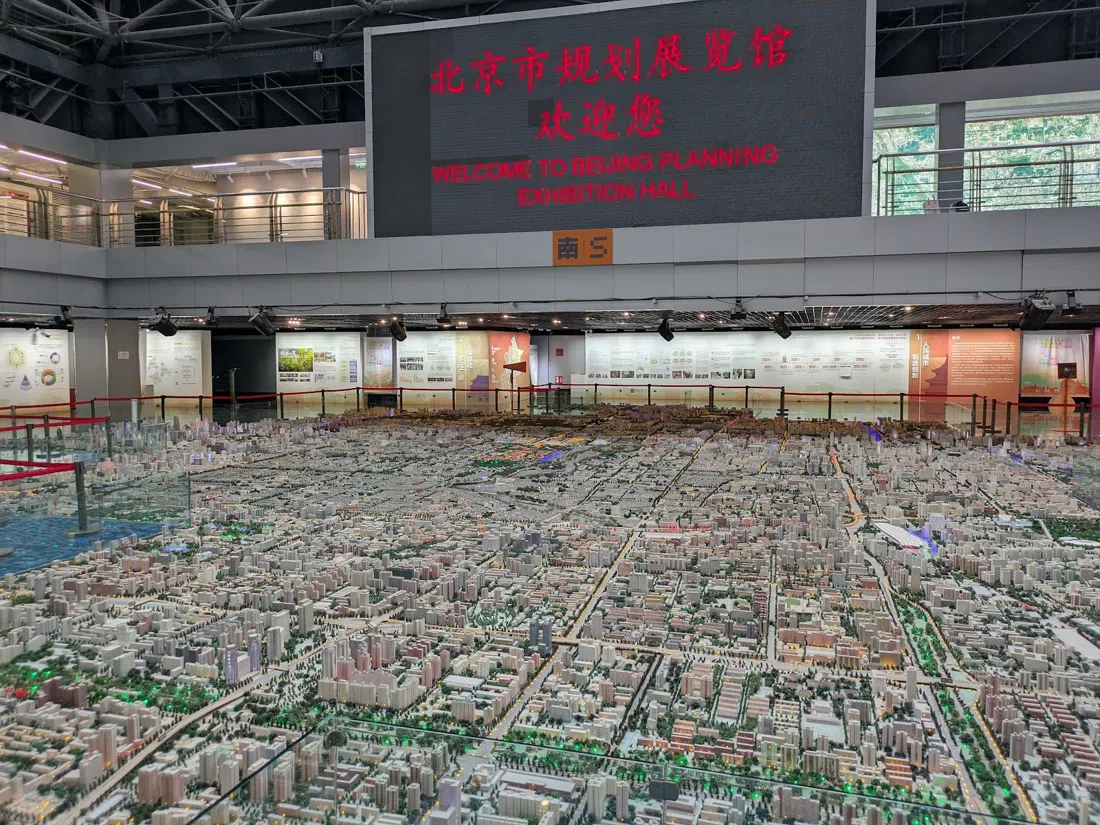
Beijing Planning Exhibition Hall, five minutes off the square's southeast corner, is free apart from CNY 10 for the multimedia theatre, open Tuesday to Sunday, 09:00 to 17:00, with last entry at 16:30. You can reserve on its WeChat account or simply register on the spot, and it takes groups comfortably. The giant city model is the fastest way to understand the central axis you have just walked, and it is now free rather than the old CNY 30.
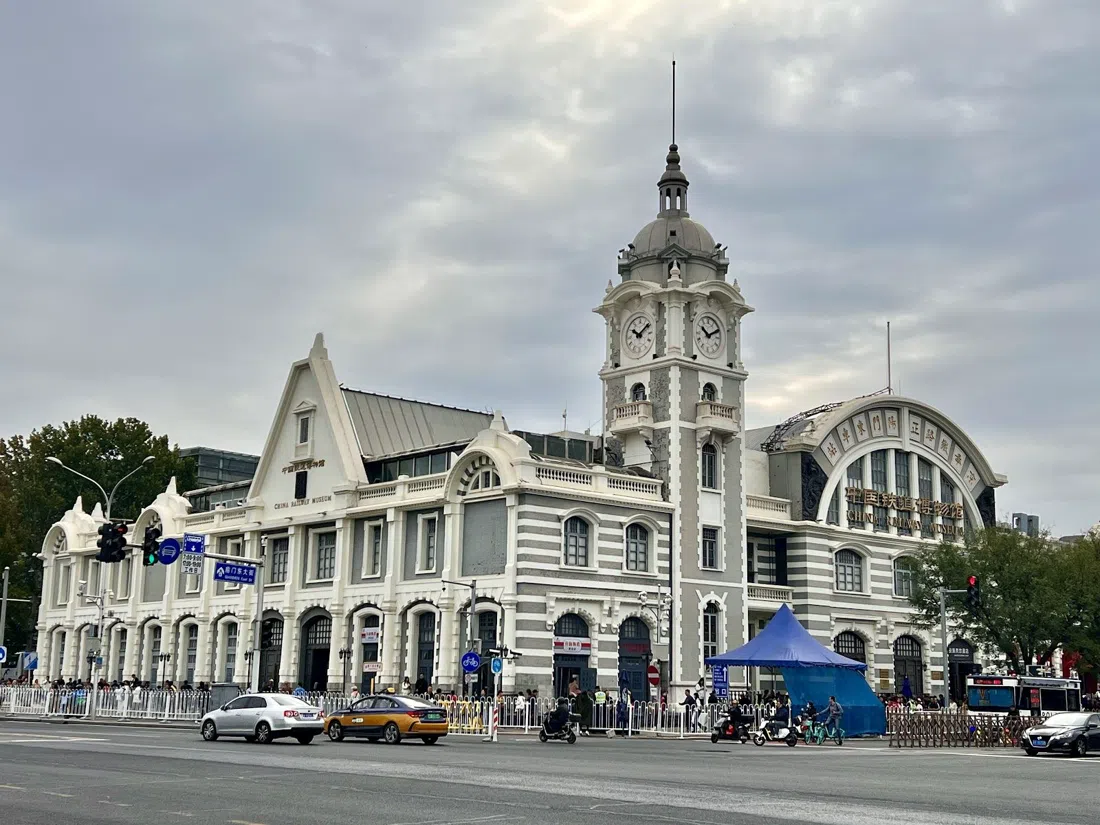
China Railway Museum (Zhengyangmen Branch), Qianmen East, occupies the former Zhengyangmen East Railway Station just southeast of the square, about seven minutes on foot from the square's south end. It opens Tuesday to Sunday, 09:00 to 17:00, last entry 16:30, for a nominal entry fee. It is a quiet half hour and the handsomest building on this side of the axis. The rooms are small, so a large party should split and stagger entry.
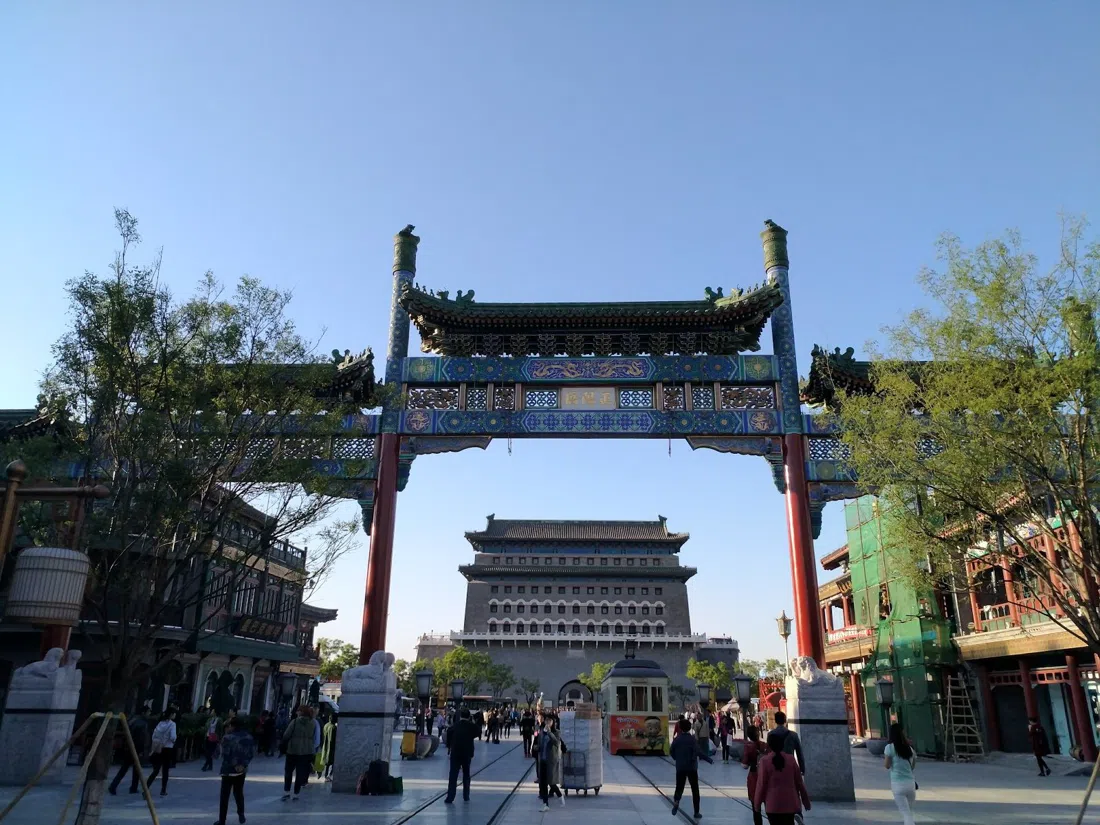
Qianmen Street, directly south through the gate, is free to walk and where most visitors end up eating, at CNY 30 to 150 a head. The reason to go is the old-name shops (Tongrentang, Neiliansheng, Ruifuxiang) rather than the chain storefronts, and the narrow Dashilan end jams at weekends. Come before 10:00 or after 17:00.
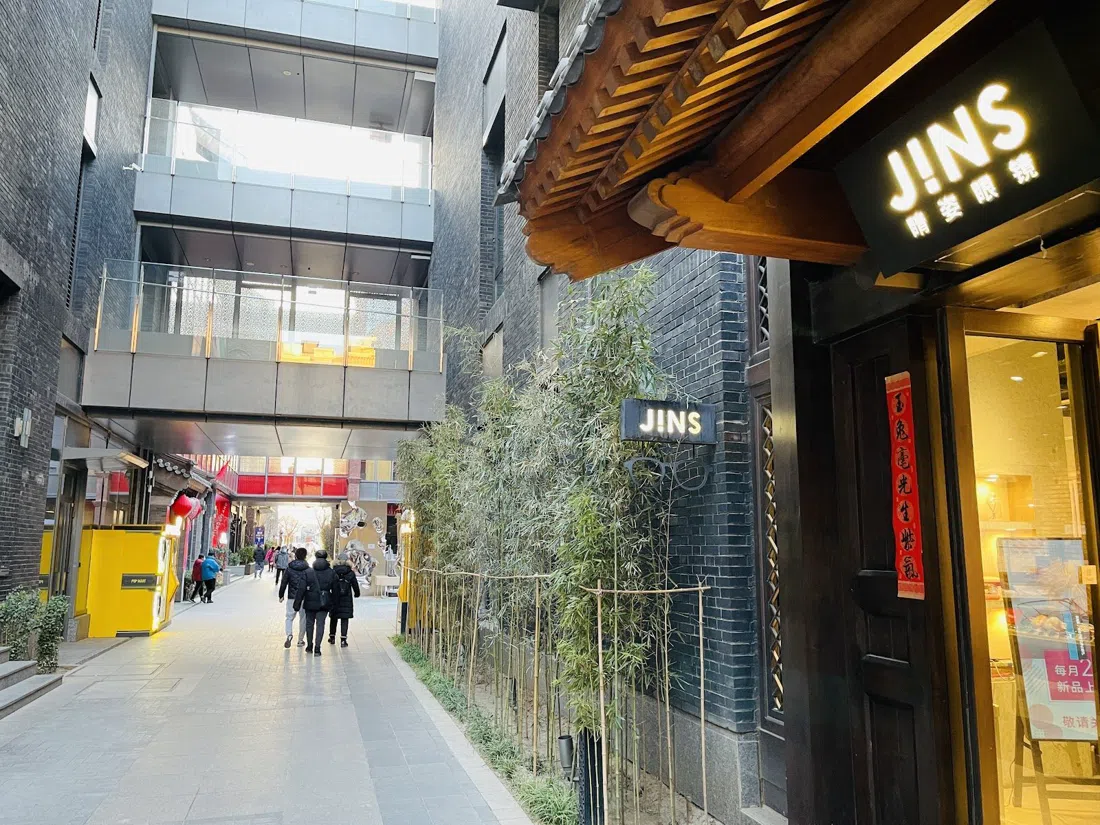
Beijing Fun (Beijing Fang), the block just east of Qianmen Street, is open public ground and free to enter. The PageOne bookstore here runs twenty-four hours, with a café and a third-floor rooftop deck looking straight at Zhengyangmen, the easiest legitimate elevated view of the area with no ticket attached; coffee is CNY 30 to 50. Being open through the night also makes it the one indoor option near the square at 04:00, and a fallback when you cannot get the slot you wanted.
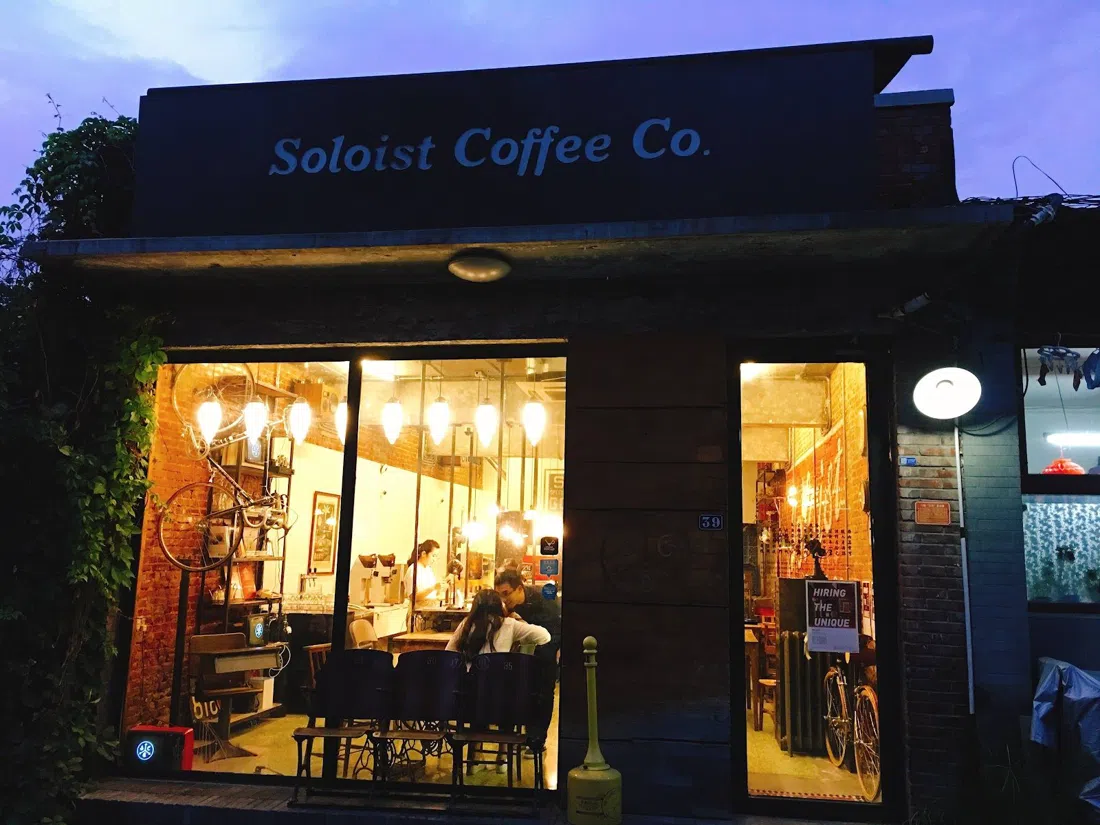
Soloist Coffee Co., at 39 Yangmeizhu Xiejie in Dashilan, is roughly ten minutes' walk from the square's south end and opens at 10:30, later on Friday to Sunday. Coffee is CNY 35 to 60. The room seats four to six comfortably and no more; there are no reservations. It is the practical place to wait out a mid-afternoon slot, or to thaw after a winter flag-raising.
Quieter ground within ten minutes
The square has no shade, no benches and no way to step out of the flow. Two or three minutes northeast of the gate, Beijing Working People's Cultural Palace (Taimiao) in Dongcheng has all three: CNY 2 for the park, CNY 10 including the main hall, no timed slots, and easy for groups. It was inscribed in 2024 as part of the Beijing Central Axis World Heritage site, and it is the nearest place to decompress after the crowds and the security queues.
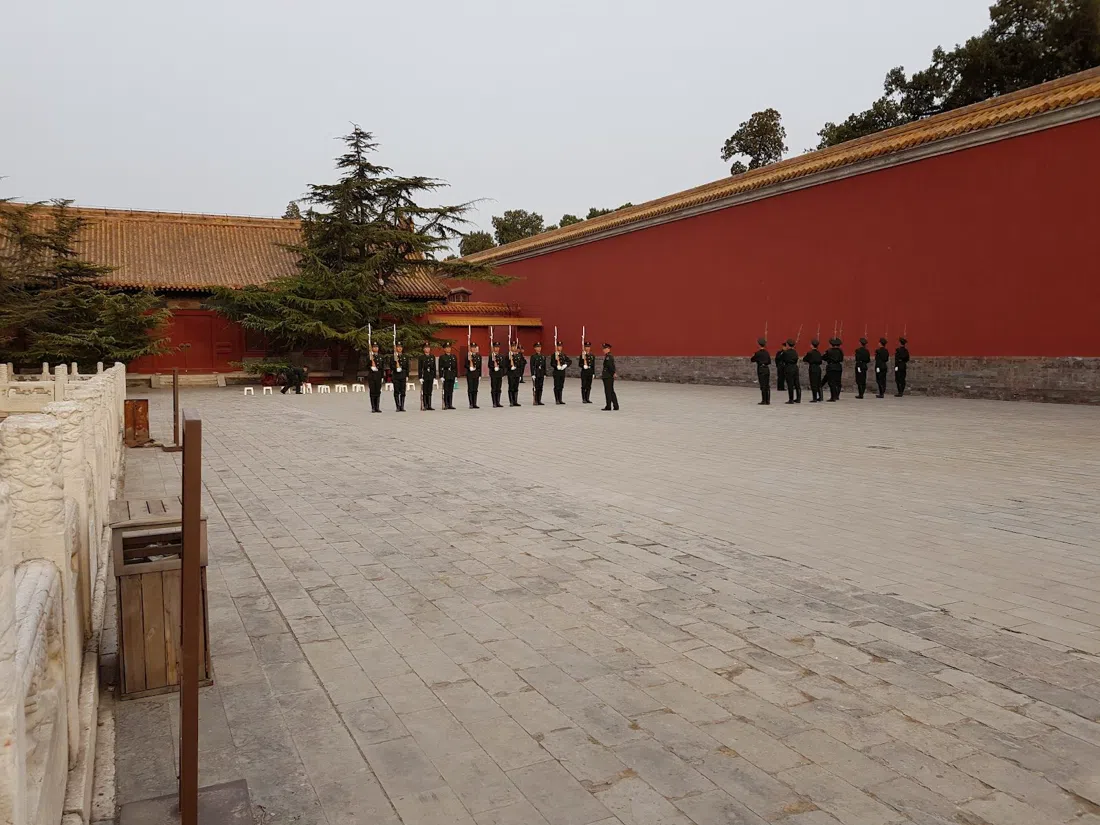
For context rather than rest, Dongjiaomin Lane (former Legation Quarter), Dongcheng, runs east from Tiananmen Square East Road and starts about five minutes from the square's east side. It is a public street, free to walk end to end in half an hour, and the one surviving stretch of pre-1949 foreign Beijing. The church and the small museums inside old bank buildings keep their own limited hours. It explains more of the square's history than anything standing on the square does.

Straight on into the Forbidden City
The Palace Museum (Forbidden City), immediately north through the gate in Dongcheng, is the standard second half of the day: CNY 60 from April to October, CNY 40 from November to March, closed Mondays except statutory holidays. Each ticket is name- and passport-bound, and you should book at least five days out in peak season. Foreign visitors can now book on the official dpm.org.cn site with a passport and an email address, then enter at the Meridian Gate on the passport alone with no paper ticket.
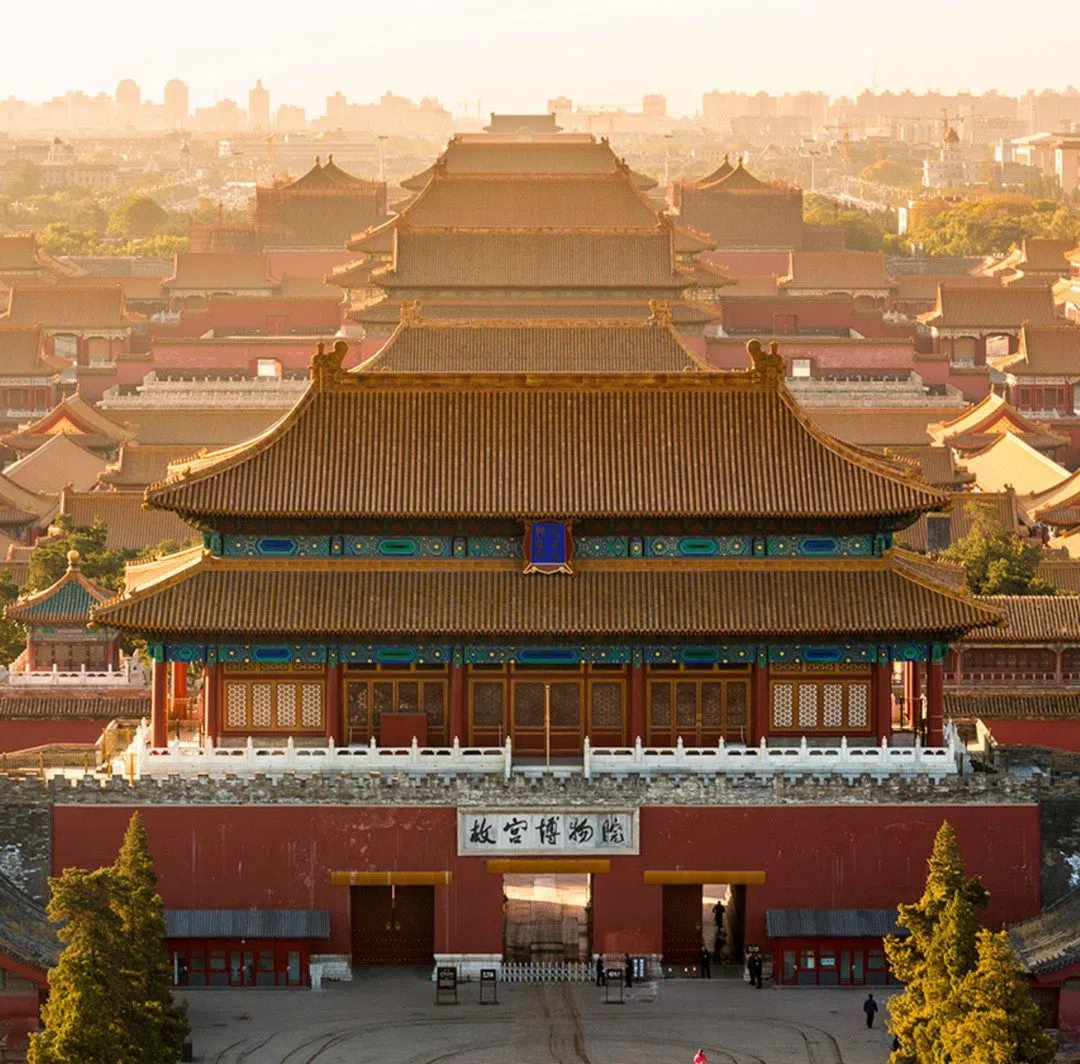
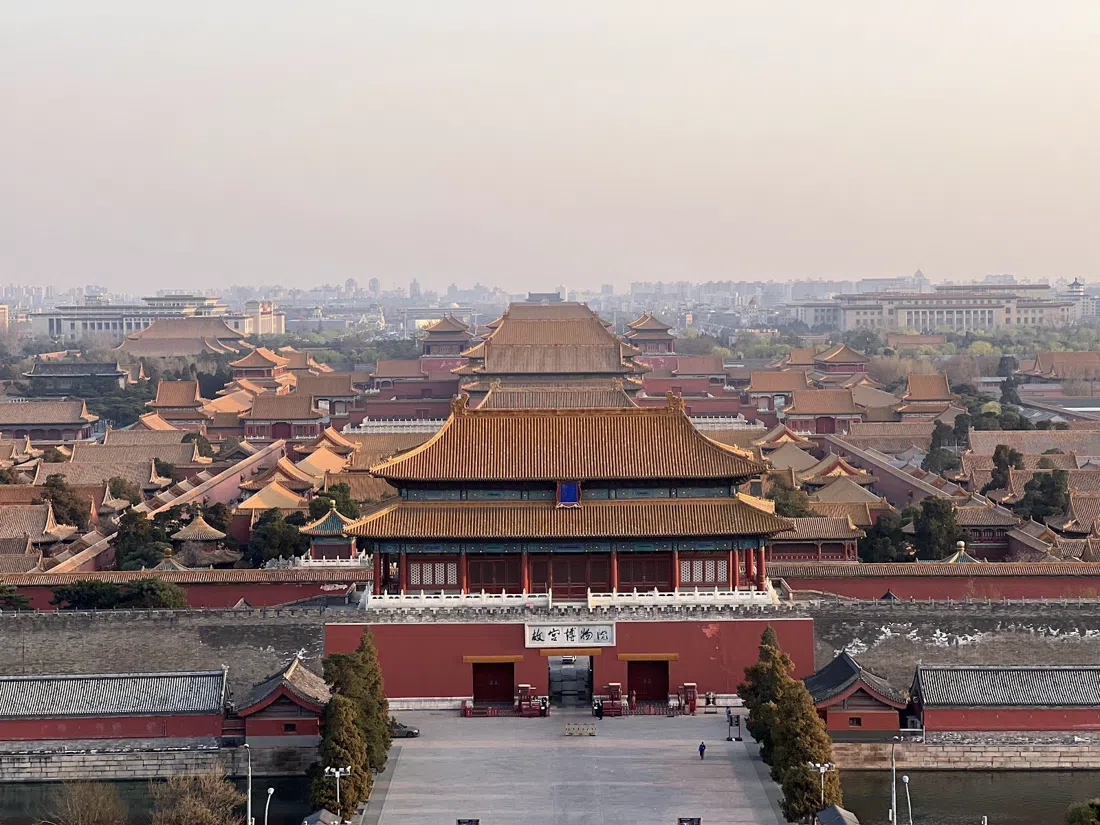
Finish at Jingshan Park, Jingshan in Dongcheng, about ten minutes' walk from the palace's north gate or twenty-five to thirty minutes straight up the axis from the square if you skip the palace. The online reservation requirement has been dropped, so you buy at the gate: CNY 2, or CNY 10 during the peony festival, open 06:00 to 21:00 from April to October and 06:30 to 20:00 from November to March. The pavilion terrace gives you the whole axis in one frame, and it is best in the last hour of light. It also gets tight up there at sunset, so allow for the climb.
Tickets at the door versus a guided day
There is no door price on the square, only a passport check. Only the Planning Exhibition Hall takes on-the-spot registration, and only Taimiao and Jingshan sell straightforward gate tickets. Everything else (the square, the rostrum, the mausoleum, the museum, the Great Hall, Zhengyangmen, the palace) is booked in advance through its own channel, each with its own release time.
A guided full-day option exists and is attached to this page as a separate card. It runs seven days a week, and prices start from 98 USD per person, usually bundling the square with the palace and a section of the wall. Across the bookable tours here there are 10,919 traveller reviews, and the top tour is rated 5.0 out of 5 from 4,186 reviews. What a guide buys you is the booking layer: the Chinese-language mini-programmes, the release times, the passport details, plus someone to explain what you are looking at. No guide buys you a shortcut through security, and a bundled day rarely includes a sunrise start. If the flag-raising is the reason you are coming, book that slot yourself and use a guide for the rest.
Best time to go
Spring and autumn are the easiest conditions: clearer air, workable light, and a sunrise at a humane hour. A midsummer dawn means being at the cordon before four, and by midday the open granite is punishing with no shade anywhere on the square. A midwinter ceremony at around half past seven is the most civilised start of the year, but the wind crossing that open ground is the coldest half hour of the trip, so dress as you would for a mountain rather than a city.
Avoid Monday for anything but the square itself. The rostrum, the mausoleum, the national museum, the Great Hall, Zhengyangmen, the Planning Exhibition Hall, the railway museum and the palace all close that day. A Monday plan realistically means the flag-raising, Taimiao, Qianmen Street and Jingshan, which is still a reasonable day but not the one most people picture.
The booking window opens one to seven days ahead, so set a calendar reminder for the day yours opens rather than trying to sort it the night before. And if a four o'clock alarm is not happening, the flag-lowering at sunset is the same ceremony with its own slot, the same crowd behaviour, and a much kinder start.
Is the dawn visit worth it
Worth doing once, for the hour around it rather than the three minutes in it. The ceremony is short, distant and largely viewed through other people's phones; the empty, low-lit square afterwards is the thing you will actually remember, and it is the only version of that space you can get. It suits early risers, photographers, and anyone building a full central-axis day, since you are already at the gate when the palace opens.
It suits families with small children badly: a long standing wait, no seating, a full security screening and nothing to look at until the guard appears. Couples do fine; large groups should accept that the paperwork scales linearly and the security queue does not care about their itinerary. If you have one morning in the city and a low tolerance for queueing, take a mid-morning slot for the square, put the rostrum and the palace in the same day, and skip the alarm without guilt.
Practical notes
Transport. Metro Line 1 serves Tiananmen East and Tiananmen West, and Line 2 stops at Qianmen, but the first trains do not run early enough for a summer sunrise, so a dawn visit means a taxi or ride-hail drop at the nearest cordon and a short walk in. Station exits and street cordons can close at short notice around official events, so leave slack.
Cash. Mobile payment is the default and the international-card link inside the main payment apps works for most visitors, but keep CNY 20 to 50 in small notes for gate tickets and lockers. Taimiao and Jingshan are CNY 2 each and are not worth a payment problem.
Timing. Budget ninety minutes of queue before sunrise, three minutes of ceremony, half an hour on the emptying square, then the mausoleum at 08:00 or the palace after that. A full axis day from the flag to the Jingshan terrace runs ten to twelve hours with two sit-down breaks.
Budget. The dawn ceremony itself costs nothing beyond transport. A full day of tickets comes to roughly CNY 107 per adult in the April-to-October season: rostrum CNY 15, Zhengyangmen CNY 20, palace CNY 60, Taimiao CNY 10, Jingshan CNY 2, plus CNY 30 to 150 a head to eat on Qianmen Street.
Where to stay. A hotel within walking distance of the square's eastern side, around the old Legation Quarter streets, lets you stroll to the cordon at half past four instead of negotiating a pre-dawn taxi; compare options with our Beijing hotel search. For everything beyond the axis, start with the Beijing guide.